August 15, 2014

Labels Matter. (So Does Everything Else)

Please don’t stop asking celebrities whether or not they’re feminists. It’s important on like, a million different levels. It matters to me, and it should matter to you, too. Now that I think about it every celebrity interviewee should have to divulge if they’re a feminist before they get the privilege of answering anything else. It would save me so much time, knowing exactly what I’m investing my time in, right from the start.

And I know the risk that comes with asking people questions, in general. I’m well aware that I may be disappointed in their answer. But, ask my parents, disappointment has become my trademark, and I’ve prepared myself to accept whatever response we get. Because it matters to me. Because its an important question. Because feminism is important.

At the core, my motivations in seeking such knowledge from my favorite pop culture mainstays are selfish, naturally. I need to make sure I can sleep at night. I deserve to know who and what I’m buying into, and how it enhances my personal brand (and ultimately, makes me a better person). We are faced with so many choices every day - the magnitude of possible outcomes in every single decision we encounter - its overwhelming. Its stressful. I can’t afford to make decisions as haphazardly as I did when I was 25, I don’t have the energy for it. Most of the time I don’t make any decisions at all, but if I must, I do my research, and act accordingly- in a way that aligns with the personal brand I’ve spent years meticulously building.

“Are you a feminist?” is becoming a standard inquiry in exposes of the rich and kinda-famous. And like I said, I haven’t always been pleased with the responses. It is glaringly obvious that, even in 2014, there is some confusion over exactly what feminism is.

A definition, by definition, is a statement expressing the essential nature of something. The ‘essential nature’ of feminism or being a feminist is the belief that men and women should have equal rights and opportunities. Thankfully, this definition leaves a lot of room for inclusion to account for the ever-changing societal hellscape we happen to exist in. Like everything else, language and definitions are fluid, in the sense that they can be added to, sharpened, enhanced, but their basic meanings cannot be changed.

There is no way to ‘redefine’ what it means to be a feminist linguistically or culturally. And most importantly, there is no need to. If a pop star is ‘redefining feminism’ with record sales rivaling that of her male counterparts or by being a wife, mother and entrepreneur all at the same time then it is your definition of feminism that needs tweaking. If you operate under the assumption that an actress represents a modern feminism by defining herself and her sexuality the way that she wants to, you’re wrong.

There are many types of feminisms, just as there are many types of - say, mammals, but at the end of the day you can count on both me and a dolphin giving birth to live young with fur. The face and display of feminist ideals is as dynamic as feminists are themselves, but the equality is the ultimate goal. The battles are different but the war remains the same. And shows no signs of ceasing.

Whether we realize it or not, gender inequality affects us all, to varying degrees. 1 in 5 American women will be raped in her lifetime. Domestic violence is the number one killer of women aged 18–45. Women are more likely than men to be poor, live below the poverty line, and be affected by memtal illness. Only 24 percent of CEO’s in America are women, and they, on average, earn 75% of what their male peers do. The United States comes in at 69th place for the number of women we’ve elected to govern. The swords are drawn, ladies. We might as well fight back.

Marilyn Monroe famously said “a journey of 10,000 miles begins with a single step,” and you know what? She’s right. In this case, the first step is a declaration of your feminism and it is by far the most important. The seemingly inconsequential act of declaring yourself a feminist is one of the most important arrows in your “You Go Girl!” quiver.

Personally, disappointing my parents turned out to be reason enough for me to be a feminist, but even that high couldn’t last forever. Which is okay, because there’s a million other reasons to be a feminist, in case you have a ’good relationship with your father ’rents or whatever.

A feminist-identity is an invaluable weapon against a patriarchal hegemony that pits us against everything: ridiculous beauty standards, each other and most detrimentally - against ourselves.

Most research proves my point, of course. A 2006 study published in Psychology of Women Quarterly found that a more developed feminist identity correlated positively to a woman’s psychological well-being. In Mauthner’s 1998 survey, the data shows a negative correlation between exposure to feminist views and depression. Being a feminist actually can make you happier.

In 1997 a survey of Psychology Today readers showed about half of non-feminist women were unhappy with their overall appearance, while only 32% of “self-proclaimed feminists” expressed the same dissatisfaction. Women who strongly identify as feminists are also less likely to suffer from eating disorders. Feminism improves the lives of women within and without - supporting both the politcal and the personal across the board.

56.4% of women in a study from researchers at the University of Vermont reported being “picked on, hit, shoved or threatened with harm because of being a woman.” Yikes. Of those threatedned, the women who were feminists not only recognized sexism and harrassment but were more likely to exhibit a resistance to such behavior. Its a start, right?

Yes. Perhaps what feminism truly offers is a sense of community, a sisterhood, if you will (I will) and the recognition that as women we share a common bond of experiences - both good and bad.

But even with all the benefits a feminist awareness and identity brings, so many women remain reluctant to take the plunge. According to a recent survey done by Huffington Post and YouGov, only 23% of women consider themselves feminists. Frustrating as it is, I don’t blame them because I can relate, and I know its not their fault. I avoided any sort of feminist labeling (or feminist-anything) until very recently. I didn’t want to be thought of as a man-hating, rude, unattractive cunt, especially since I’m actually so pretty. I worried that I’ll never get married, have children and that my Dad was right all along. My first understanding of feminism was so embarassingly off the mark I had no choice but to start from the begininng, there’s no sense in redefining bullshit, after all.

The misconceptions and stereotypes of the “ugly, man-hating, overly aggressive, mean feminist” perpetuated in the 1980’s are the basis of how many women my age define the movement, and most of us are incorrect. The effect of anti-feminist attitudes of decades ago have lingered and remaind ingraned in so many Americans’ cultural consciousnesses. We have been left with a generation of young women who agree with the tenets of equality between the genders but who refuse to devlop their own feminist identities. The percentage of women today who claim they are scared to call themselves femininsts, all while enjoying the rights and freedoms that sheros of the past fought for. The way in which someone qualifies her feminism (or lack thereof) serves as a powerful reminder that although such rampant ignorance gives me something to complain about, in the end our status is far from blissful.

So please, red carpet reporters, I’m begging you: keep asking celebrities whether or not they’re a feminist. I need to know exactly how they, themselves, personally feel about equal rights for men and women. I may not always or ever be happy with the answer, but I can handle it, I promise. I need to what I’m incorporating into my own identity and how it will enhance my daily life. Most importantly, I deserve to know exactly what they’ve got in those quivers.

July 12, 2014

A "What Kind Of Feminist Are You?" Quiz of My Very Own!

Let's do this. 


In more detail: 

1.
(lookin' at you, old white dudes)

2. 

3. 

4. 

5. 

Although, if we're being honest, he'd have broken up with you way before taking this quiz. 

6. 

June 16, 2014

The Frivolity of Stirrup Pants

     I’d like to start off by letting you know that I’m not mad, just disappointed. It’s been nearly a week since the University of Virginia publicly maligned the very essence of who I am, who I have been and who I plan to be. And I'm not the only one, either. Countless reputations, personal narratives and the future dreams of basically everyone I know - or would ever care to know - dashed; dragged through the mud in the name of - at best, science; and at worst, revenge. Will no one speak for us? Will no one raise their voice to avenge the honors of those who were perpetual team captains; those who always had a partner for school projects? 

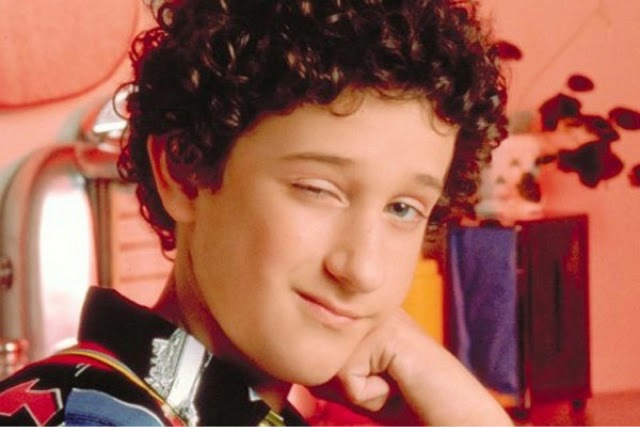
     “What Ever Happened To The ‘Cool’ Kids? Long-Term Sequelae Of Early Adolescent Pseudomature Behavior” is as appalling as it is bombastically-titled. Detailing the findings of a 10-year study that followed 184 public school students from the ages of 13 to 23, the study examined what effect, if any, social status has on their lives in early adulthood. In addition to responses from the teens themselves, the study also collected information from the participant’s peers and parents, in an effort to shed light on what happens to the Fonzis, the Kelly Kapowskis and the Steve Holts once we leave the hallowed halls of high school. All in the name of science and posterity, of course! In the name of self-esteem a little too, I’d bet. Also, to finally answer a question from the researchers’ own youths; an age-old question wondered by young geeks the world over: “How much longer do I have to wait until bad things happen to really popular, good-looking people?” According to the most recent research, you won’t have to wait long.

     A mere decade is all it takes to turn the table, for the victims to become the victimizers. By the time they turn 23, students who started out as Cher Horowitz had evolved into a the role Brittany Murphy played … in “8 Mile” that is, not “Clueless.” (Although I do believe that being Kim in “8 Mile” is better than being dead or even worse, a virgin that can’t drive) 
  
     Criminal activity and substance abuse is reported at higher levels among the 23 year olds who spent their teen years sneaking into The Attic, which you hopefully will remember is the hottest, most happening 18-&-up dance club that’s ever existed. But wait, it gets worse. All grown up, ‘cool’ kids have difficulty maintaining social relationships in early adulthood, too, despite being elected to prom court every year in high school. 
  
     Who could’ve known that being born attractive would cost us so dearly? How could any of us have foreseen that we would pay for wearing Abercrombie & Fitch jean skirts every day for the rest of our lives? Why didn’t anyone warn us that it the geeks who shall inherit the earth? And the kids who would ask for homework? The ones that wouldn’t pass a note along to your best friend in 4th period social studies even though your very life depended on it? They’re living large, reveling in the sad, pathetic lives that ‘cool’ kids unknowingly created for themselves.

     Real life is, as I can attest, harder than I could’ve ever imagined. Everything that “Saved By The Bell” promised us (in the high school or the college years, take your pick)? It’s all garbage. Which is fine, I guess, and it’s not like anything could be done if it wasn’t.

  I learned early and often what disappointment was and how it felt. As an adult, I know it’s my duty to pass on all I’ve learned about disappointment - to mold and shape the minds of everyone who crosses my path. They need to learn and relearn disappointment, too. “Don’t mention it! You can thank me by paying it forward!” is what I say to the new people I meet, sending them along to share their own truths about let-down. I’ve only been called Mother Teresa two times before, and although I admit it was a bit grandiose for my liking, I really am a gift that keeps on giving. But anyway, enough about me.*

     I was never particularly mean to anyone but myself growing up, and from second grade on, I had more friends than I knew what to do with. I was practically knee-deep in friends and plans and parties and oh my! I’m reveling in the hope -so much hope. Oh, the endless possibility. It wouldn’t last, as anyone who’s ever made it past puberty will tell you. If only I had even the slightest inkling how glorious it was to enjoy the frivolity of stirrup pants, the lawlessness contained in the pages of “The Boxcar Children,” or the importance of diversity in our collective and individual histories illuminated by the end of each episode of “Ghostwriter”! I never had the slightest inkling, though. Folly and pain is the nature of youth, I suppose. Regret is a prerequisite to adulthood no matter how it manifests itself within you.

  In general, it’s all pretty problematic, you know, being alive. In specific though, this study. The researchers here have made the assumption that being ‘cool’ or being worshipped by your peers made life easy - that your teen years were a cakewalk - a veritable smorgasbord of happiness and good fortune. Let me be the first to say: I wish! In what imaginary land does being forced to choose between a dozen Sweet Sixteen parties come without taking a toll? Even thinking about the effort and coordination - factoring in who was going to which party and at what time coupled with whether or not they had an after–9 driver’s license, all of which was inconsequential unless you could find something to wear from the mall and if their older brother was going to pick everyone up some Zima before the party and if so, I mean, would it even be chilled?

  Growing up is hard for everyone. The process of becoming people - real actual persons, is fraught with adversity and heartache. And don’t get me started on the terrible haircuts, countless unrequited crushes and - well, I know we all remember Doc Maarten’s. And to boot: it takes forever. I know several men, in fact, all around the age of 30, who are still tepidly testing the bitter streams of maturity, desperately trying to grab hold of something - former high school glory, an expansive collection of Dave Matthews Band live albums, a pukka shell necklace that got them so many chicks during spring break of senior year - to help them paddle past the rising tide of responsibility, and safely into manhood - a calm pool of receding hairlines and “The Wire” on DVD. It happens to women, too, of course, much earlier and the waters far more treacherous, but we are changed nonetheless.

     I’ve always felt that everything we encounter becomes part of us- that all of it not only matters, it shapes who we become. I’ve always thought that we are all changed- consciously, subconsciously, internally and externally - by forces and factors working together just waiting for the opportune time to strike and alter us in ways we can’t imagine. And in ways we won’t be able to recognize, not at first, anyway, and even then, decades later, there’s no promise we’ll put the pieces back together if we even want to in the first place. There’s no guarantees. No one promises any of us that we’ll make it to adulthood, physically, emotionally, spiritually, mentally, cosmically, literally. It’s all a bit terrifying to consider, even now that I’m grown, you know?

     And more to the point: who cares about 23 anyway? It was an off-year for me, and I can’t imagine it was different for people as with-it as I am. Furthermore, what’s the purpose of 23? Sure, its an important stop on the path that each of us travel before spending an eternity in Hell, but other than that? Come on. Maybe the popular kids were having a rough time dealing with the fact that 23’s an odd number. Maybe those who sat wherever they wanted in the cafeteria were struggling because there’s no power anthem about  being 23. And I know what you’re thinking but you’re wrong; Taylor Swift wrote about the age of 22. Jimmy Eat World wrote a song about being 23 and I can barely keep my veins intact if it comes on. When you think about it, being 23 is bullshit. I mean, but so is being 24, 25, 26, 27, 28 and 29 (if you give me a couple weeks, I’ll let you know about 30, but all signs point to it being terrible, too).

  So, listen. I get it: you ate lunch alone in a girl’s bathroom stall and I’m sorry. But I was there too, trying to apply my 5th coat of eyeliner before Chemistry. I don’t remember you striking up any conversations even though I was probably wearing horizontal stripes and was therefore so vulnerable. Did anyone ever think that, I don’t know, maybe I liked the taste of Zima in middle school? Or that I was genetically predisposed to be cool as hell? Of course not. And I refuse to stay quiet. I will not back down as, once again, my hardships are dismissed and my shortcomings highlighted. I remain, as always, marginalized by the mainstream. These days I’m not just eating my lunch alone, I’m doing everything else alone, too. But this time, at least, I was ready for it.